Video Intercom for Villas and Buildings: Analog, 2-Wire or IP?
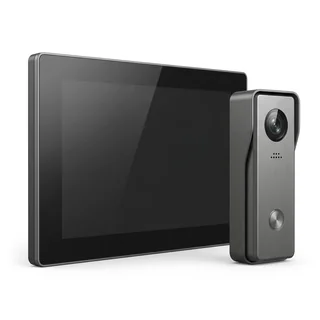
A video intercom lets you see who is at the gate before you open, talk to them from inside, and release the lock without walking to the door. Modern systems also send the call to your phone, so you can answer a delivery while you are at work. The right system depends on the building, the existing wires and how many homes share the entrance.
The parts of a video intercom
- Door station (outdoor station): the unit at the gate or building entrance, with a camera, microphone, speaker and call button. Apartment buildings use a door station with a keypad or a list of names to call each flat.
- Indoor monitor: the screen inside the home where you see and talk to the visitor and press unlock. Villas often have more than one: ground floor, upper floor, kitchen.
- Lock: an electric strike, an electromagnetic lock or a gate motor that the system releases.
- Power and network: a power supply, a PoE switch or a special 2-wire switch, depending on the system type.
- App: on IP systems, the brand's app (DMSS for Dahua) receives calls and unlocks remotely.
Three system types
Analog
Traditional analog video intercoms send video and audio over dedicated multi-core wiring. They are simple and inexpensive for a single villa with one monitor, but they usually lack app calling, have lower image quality and are harder to expand.
2-wire IP
2-wire systems carry digital video, audio and power over just two wires. This is very useful when you are replacing an old intercom and the building already has a pair of wires to each apartment or to the gate. Dahua's 2-wire IP range, for example, uses a dedicated 2-wire switch to power the door station and monitors over the existing pair and still offers app unlocking. Check the maximum wire distance in the datasheet; it depends on the model and the cable.
IP (Ethernet)
IP intercoms run on standard network cable, usually powered by PoE. They offer the most features: high-definition cameras, app calling, multiple monitors, integration with the NVR so the door camera is recorded, and access control from the door station. For a new villa or a new building, IP is the natural choice, and the same Cat6 cabling plan can serve cameras and Wi-Fi access points too.
| Analog | 2-wire IP | IP (Ethernet) | |
|---|---|---|---|
| Wiring | Multi-core | Existing 2-wire pair | Cat6, PoE |
| App calling | Usually no | Yes, on supported models | Yes |
| Best for | Simple single-villa setups | Upgrading old buildings | New villas and buildings |
Villa or building?
Villas
A villa usually needs one door station at the main gate, sometimes a second at the house door, and one or more indoor monitors. Check that the monitor can show the door camera and, on some models, other IP cameras. If the gate is far from the house, plan the cable route early, and remember the 100 m limit for Ethernet runs.
Apartment buildings and compounds
Buildings need an apartment door station at the entrance that can call each flat, either by keypad or by name list. Larger systems add a guard station so the security desk can take calls. Plan the number of apartments, how residents will receive calls (monitor, app or both) and who manages the system once it is installed.
Door stations: what to check
- Camera: a wide-angle lens, often around 160 degrees on villa stations, shows the visitor and the area around them. Check night performance and whether the station has its own light.
- Weather and vandal rating: look for an outdoor rating such as IP65, and an IK rating for impact resistance on public entrances.
- Lock outputs: how many locks the station can control, for example a pedestrian door and a car gate.
- Access options: some door stations add a card reader, keypad codes or face recognition, so residents can open without calling.
- Mounting: surface or flush, and whether a rain hood is available.
Locks and safety
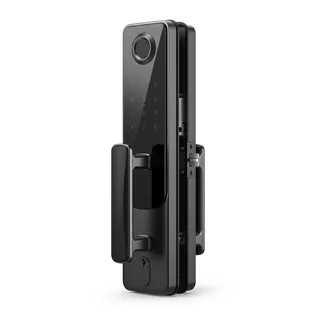
The lock is where intercom and access control meet. Two common types:
- Electric strike: fits in the door frame and releases the latch. Many are fail-secure, staying locked when power is lost.
- Electromagnetic lock: holds the door with a magnet. These are fail-safe, opening when power is lost, which is why they are often used on escape routes, and why a backup power supply matters for security.
Always fit an exit button on the inside for magnetic locks, and agree with the building on fire-safety requirements for emergency exits. Put the intercom power supply and switch on a UPS so the system keeps working during power cuts.
Practical tips
- Mount the door station so the camera sees faces at a normal height, and avoid facing direct afternoon sun into the lens.
- Place indoor monitors where you can hear the call: near the living area and the kitchen.
- Set app notifications for every family member who should receive calls, and remove access when someone moves out.
- Change default passwords and keep firmware updated, as with any network device.
Where to start
- Browse video intercom systems and intercoms and video doorbells.
- Gates and entrances: access control and locks and exit buttons.
- For IP systems: PoE switches and UTP cables.
- Upgrading an old building intercom? Contact us with photos of the existing units, or book an installation visit.